
For law firms, consultants, and agencies, traditional commercial leases are becoming financial anchors. Data shows a major shift toward asset-light strategies for 2026. Choosing a month-to-month office space saves capital, cuts construction costs, and keeps a Grade A presence without long-term debt or personal guarantees. This guide explains why professionals are ditching rigid leases for the agility of premium flexible workspaces.
The multi-year commercial lease is a broken model.
Today, picking a month-to-month office space is the smartest financial move for growing firms. It used to be that signing a five-year contract for an empty shell showed business maturity. Now, it is just a restrictive liability.
Independent professionals who need focus and privacy want liquidity. Multi-year contracts destroy that agility.
This isn’t about design trends. It’s about the math of real estate.
Look at office vacancies heading into 2026. Older buildings are sitting empty while demand for premium, ultra-flexible workspaces is rising fast. Elite professionals are refusing to subsidize failing commercial real estate models.
Flexible terms help you manage operational risk. We will look at how hidden costs in traditional leases eat your profit and how Catalyst Workspaces acts as a strategic asset for those who refuse to be stuck in a five-year plan.
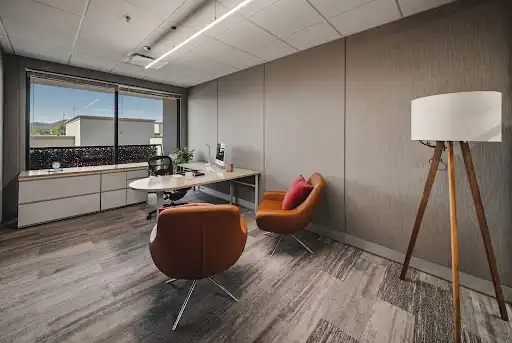
Why long-term leases hurt cash flow
A traditional lease is a long-term debt that freezes your cash through the “Bare Shell Tax.” Big security deposits, expensive build-outs, and personal guarantees lock up your money. Month-to-month terms turn real estate into a predictable monthly expense instead.
Once you sign for five years, your liquidity drops.
The Cost of Commitment
Landlords want huge deposits upfront. They often ask for personal guarantees that put your own family’s wealth at risk.
Then comes the Bare Shell Tax. You have to pay for carpets, walls, and wiring just to make the office usable. Why put money into drywall when you could use it to hire better talent?
The commercial market is struggling. Commercial delinquency rates hit 11.41% in early 2026, which shows how volatile traditional real estate has become.
Running a firm requires cash flow, not concrete. With supply chain issues and labor shortages, office fit-out costs in 2026 are rising faster than base rents.
You take all the risk of inflation and delays before you even move in. Avoiding multi-year contracts protects your bottom line. You can walk into a furnished, wired office on day one while keeping your cash fluid and your personal assets safe.
The hidden math of overhead
Base rent is often a total illusion.
When you look at an empty floor plan, the price per square foot is rarely what you actually pay. Landlords move the costs of owning the building onto you.
The “attractive” base rate usually hides:
- Common Area Maintenance (CAM) fees
- Rising property taxes
- After-hours cleaning services
- Utility surcharges
While 2026 average rents for U.S. office space are between $23 and $38 per sq. ft., the markup is high. By the time the lease starts, tenants pay an extra $11.50 to $13.50 per sq. ft. annually for CAM and utilities.
You end up paying for lobby renovations, roof repairs, and landscaping. You also pay for meeting rooms that stay empty 80% of the time.
This is where smart professionals pivot.
At Catalyst Workspaces, these costs are bundled into one predictable payment. You get Grade A amenities without managing seven different utility bills. You stop paying for unused space and move to a pay-as-you-go model. Fixing the AC is the landlord’s problem, not an unexpected bill for you.

Agility as a competitive advantage
Business growth is hard to predict.
Traditional leases assume your team size won’t change for five years. A month-to-month office space lets you change your footprint whenever you need to. Whether you are growing or downsizing, a flexible office lease ensures you only pay for what you use.
Moving fast separates thriving firms from those that get stuck. A long lease forces you to guess your company size years in advance. You either get too little space and stop growth, or too much and waste money on empty desks.
Rise of Flex-Demand
Real estate markets are noticing this shift. Flexibility is now a core requirement for business strategy.
Companies don’t want to carry dead weight. Flex space and Global Capability Centers made up over 70% of new office demand in early 2026.
| Metric | Traditional Leases | Month-to-Month Flex
|
|---|---|---|
| Commitment | 3–10 Years | 30 Days |
| Upfront Cost | High (Build-out + Deposit) | Low |
| Financial Risk | Personal Guarantees | Corporate Lease |
| Move-in Speed | 3–6 Months | 24 Hours |
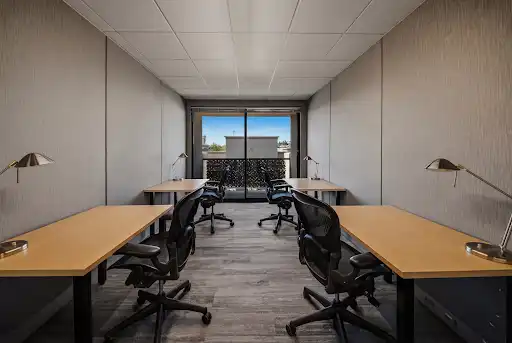
Modular layouts make it easy to change. By looking at different workspace options, you can adjust your layout to match your revenue.
You can move from a two-person suite to a six-person office in the same building over a weekend. Catalyst Workspaces allows this without a punishing new contract. If you land a big client, you upgrade immediately. If you need to cut costs, you shrink your footprint just as fast.
Avoiding the split in the office market
The office market is splitting in two.
There is a gap between old, aging buildings and modern, optimized spaces. You can’t ignore this when building your brand.
Data shows demand for Grade A space is high while old-school long-term buildings are weakening. Landlords of struggling buildings are dropping rates and offering cheap long-term deals to trap tenants.
Smart lawyers and advisors don’t settle for a decaying building. A cheap lease in a bad property looks shaky to high-net-worth clients.
The global flexible office market is expected to hit $56.04B in 2026 because it solves this. Professionals use Catalyst Workspaces to get a Grade A experience without the huge upfront cost. You get a managed reception and high-end building quality without the risk. Your brand looks prestigious, but your balance sheet stays flexible.
Recruiting and keeping top talent
Your office is a tool for recruiting.
The modern workforce is picky about where they work. Small agencies and law firms can’t hire the best people if the office is dark, loud, or isolated.
Top performers want professional surroundings. They don’t care about ping-pong tables; they want a place designed for deep work.
Flex space has changed to meet this need. 54% of coworking businesses were profitable by 2025, showing the market has stabilized for serious professionals. In fact, 55% of global occupiers now use flexible office solutions.
To hire the best, you need private offices with real privacy. Catalyst Workspaces offers a premium feel the moment people walk into the lobby. A polished environment tells hires you invest in their work.
Right-sizing your real estate
Many businesses lease 30% more space than they need for “future growth” that never happens.
Using a short term office rental gets rid of “zombie square footage.” You pay for what you need today and keep the right to expand next month.
In 2026, you have to be honest about daily attendance. Companies used to want 150 to 200 square feet per person, including huge filing rooms and big break areas. Today, paying for empty desks is a waste of money.
Cutting “Zombie” Space
Zombie space is a problem in traditional leases. A group might pay for 2,000 square feet but only use 1,200. The rest is just empty space that you are still heating, cooling, and paying taxes on.
A no long term lease office fixes this. When you look at office space options, you only focus on what you need now.
You get the desks you need today and stop paying for space you might use in two years. Catalyst Workspaces focuses on physical efficiency. You get an optimized layout for your headcount and keep your profit margins healthy.
Keeping control of your capital
Choosing a lease is about more than convenience. It’s about financial survival.
In a world where agility matters most, locking into a five-year debt is a mistake. By choosing a month-to-month flex office space at Catalyst Workspaces, you get a premium address and Grade A amenities. You skip the build-out costs and the confusing maintenance fees.
Most importantly, you keep your capital where it belongs: under your control and ready to move.
FAQs
What are the hidden costs of a traditional commercial lease?
Traditional leases go way beyond base rent. You often pay for property taxes, insurance, and Common Area Maintenance (CAM). You also pay the “Bare Shell Tax,” which is the cost of building out an empty office to make it usable.
Is month-to-month office space more expensive than long-term?
The rent per square foot might look higher at first, but the total cost is usually lower. When you add up utilities, maintenance, cleaning, and furniture, flexible terms usually cut your operating costs by 20% to 30%.
How much square footage do I need per person?
In 2026, efficiency is key. Most professional teams work well with 75 to 100 square feet per active desk. Flexible models mean you don’t have to pay for empty conference rooms or space for employees you haven’t hired yet.
Are flexible offices private enough for attorneys or advisors?
Yes. Premium flex spaces are not the same as loud, open-plan offices. Catalyst Workspaces focuses on acoustic privacy and professional decor. Attorneys and advisors can have confidential meetings in sound-dampened rooms designed for professional work.
Do I sign a personal guarantee for month-to-month space?
No. This is a huge benefit. Traditional landlords often make you risk your personal assets to sign a lease. A flexible agreement usually avoids these guarantees, keeping your personal wealth separate from your business.