
Working from home is a great way to start, but successful founders eventually hit a performance ceiling. If you are tired of apologizing for noise, struggling with work-life boundaries, or feeling isolated, you have likely outgrown your house. Moving to a professional environment aligns your workspace with the brand you built, making sure your surroundings help you scale instead of slowing you down.
A spare bedroom is a perfect lab for a new entrepreneur. The overhead is low and the commute takes thirty seconds.
But most people eventually reach a point where they realize they have outgrown their home office.
The comfort of your house can start to work against you. It is more than just a laundry basket in the background of a Zoom call. You eventually hit a mental and logistical wall.
For attorneys, financial advisors, and agency owners, your space is part of your brand. Once your practice reaches a certain level, the friction of working where you sleep becomes a tax on your productivity.
Finding work from home alternatives is becoming a priority for many. In fact, 38% of professionals plan to move into upgraded corporate environments by mid-2026.
Identifying the Growth Anchor
Here are the clear signals that your spare room has shifted from a startup asset to a growth anchor.
Does your physical setup match your brand?
Your environment limits your success when the background of your calls contradicts the value of your services. Pitching high-dollar deals from a kitchen table creates a gap in client confidence. It makes it harder to close deals.
Successful remote professionals often face an identity crisis when:
- They sell premium expertise.
- Their visual presentation looks amateur.
- They are attending 50% more video meetings than in previous years.
This increase in digital meetings requires good acoustics and a professional backdrop to command respect.
Many high performers move into shared spaces to get the structure and professional environment a house cannot provide.
Clients notice the small things like lighting and room noise. An upgrade from home office setups to a suite at Catalyst Workspaces removes this friction. You can shut your door and instantly look the part.

Client meetings at home are liabilities
Hosting a serious conversation at a kitchen island is a logistical nightmare. Apologizing for a barking dog or a delivery driver during a pitch hurts your authority.
Why risk your reputation on variables you can’t control?
Trying to fix this by meeting at a coffee shop isn’t much better. You end up competing with espresso machines and shouting your strategy over a crowd.
You need real infrastructure for high-stakes talks. Most professionals see this shift coming, with 83% viewing a hybrid model as the best way to succeed.

This strategy depends on having access to meeting rooms when you need them. It means no more blurred backgrounds or whispering sensitive information. You get fast internet and a professional look every time.
Privacy needs and your space
Regulated professionals hit a ceiling when their home fails to meet security standards. Whispering financial details so your family doesn’t hear is a sign you need a remote worker office space.
The Compliance Burden
Attorneys and accountants have legal mandates for confidentiality. You can’t leave client files on a table near the TV. Beyond digital security, physical privacy is a must.
If you run a complex practice out of a bedroom, your boundaries eventually collapse under modern regulations.
Growth is also limited by taxes. The IRS simplified home office deduction is capped at 300 square feet. This makes it hard to scale filing systems or add equipment.
Benchmarks suggest a professional operation needs 150 to 175 square feet per person to be productive.
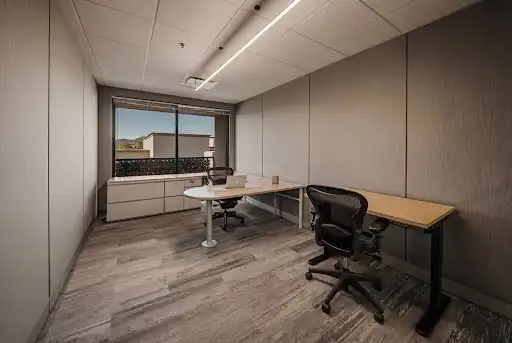
Leasing private office space at Catalyst Workspaces solves this. You get a lockable, quiet office built for business and sensitive tasks.
Why blurred boundaries hurt output
Mixing your relaxation zone with your workspace creates a tough psychological loop. When your laptop is five feet from your bed, your brain struggles to focus.
The edges of your workday disappear.
You might find yourself:
- Working on spreadsheets at midnight
- Doing chores during deep work blocks
- Failing to “switch off” after work
This drains your energy and makes it harder to produce high-quality results.
There is also an emotional cost. Staring at the same walls for months can hurt your drive. Nearly one in four remote professionals expect to deal with loneliness by 2026.
Isolation can kill innovation. About 22% of remote workers link domestic isolation to a drop in creative output. Creativity usually needs movement and a change of scenery.
A routine at Catalyst Workspaces brings back the “commute” for your mind. Walking through commercial doors tells your brain the workday has started.
Solo work stunts networking
Building a company in total isolation creates an echo chamber. You have to solve every single problem alone.
You miss out on the random ideas that happen during a quick chat in a hallway. Removing those moments can starve your business of new opportunities.
The Shift Toward Hybrid Work
| Metric | Statistic
|
|---|---|
| Projected Remote Workers (2026) | 32.6 Million |
| Employees Demanding Hybrid Access | 6 out of 10 |
| Professionals Planning Moves to Corporate Spaces | 38% |
Top professionals don’t want to stay in a messy living room forever. The home-only experiment is changing, as 6 of every 10 employees now want a hybrid arrangement.
Being in a hub expands your chances for luck. Choosing a professional office for remote workers like the office space at Catalyst Workspaces puts you around other driven people.
Instead of waiting for LinkedIn connections, you build real relationships in person.
Matching your environment to your success
Realizing you have an outgrown home office isn’t a failure. It means your business is succeeding.
Your career is simply moving faster than your spare room can handle.
Many organizations see this, with 67% adopting hybrid strategies because staying home can stall momentum.
But you don’t need a boring traditional headquarters either. Today, two-thirds of companies value location options over a mandatory daily commute. The smartest founders choose an environment that fits their specific workflow.
Don’t let an amateur setup hold back your growth.
Whether you need a private suite for client data or a modern boardroom for a big pitch, Catalyst Workspaces provides the authority you need. Use our workspace flexibility to grow your footprint as your work grows.
FAQs
How do I know if I’m experiencing home office burnout?
It usually shows up as an inability to separate personal time from work. If you are doing laundry during calls or checking emails at midnight, you lack the physical boundaries needed to rest.
Is it better to get a private office or a coworking membership?
It depends on your need for privacy. Lawyers and financial advisors usually need private suites for confidentiality. Founders who want to network often prefer the open layout of shared spaces.
How much office space does a small business owner need for a team of two?
Most benchmarks suggest about 150 to 175 square feet per person. A team of two should look for a suite around 300 to 350 square feet for desks and storage.
Can I still claim a tax deduction if I use a flexible office space?
Yes. Leasing commercial space is a standard business expense. Unlike the home office deduction, which is often capped at 300 square feet, a dedicated suite is a clear operational cost for your taxes.
How can I stay professional while still working partially from home?
Try a hybrid split. Use two or three days for client meetings and deep work at a professional facility like Catalyst Workspaces. Save your home office for admin tasks that don’t require a professional background.